
Facing criminal charges doesn’t mean facing them alone. Pazuki Law Group offers free, confidential consultations so you can understand exactly what you’re dealing with and what your options are—before making any decisions.
A drug charge in Ontario is a criminal matter that can follow you for years, affecting your job, your record and your ability to cross the border. If you have been charged with possession, trafficking or a Cannabis Act offence, the time to speak with a drug defence lawyer is now, before you explain anything to police about what was found or where it came from.
Pazuki Law Group represents people charged under the Controlled Drugs and Substances Act and the Cannabis Act throughout Newmarket, Aurora, Richmond Hill, Vaughan, Markham, Bradford, Barrie and communities across York Region and Simcoe County. As a criminal defence law firm, we know drug cases often turn less on what police found than on how they found it. Searches of homes, cars and phones all have legal limits, and when police cross them, the evidence can be challenged.
Most drug charges in Ontario are prosecuted by federal prosecutors from the Public Prosecution Service of Canada, not the provincial Crown, because the Controlled Drugs and Substances Act is a federal law. That means a different prosecutor’s office, different policies on resolution and diversion, and sometimes a different pace than a provincial case like an assault. Knowing who you are dealing with matters when you are trying to resolve a case.
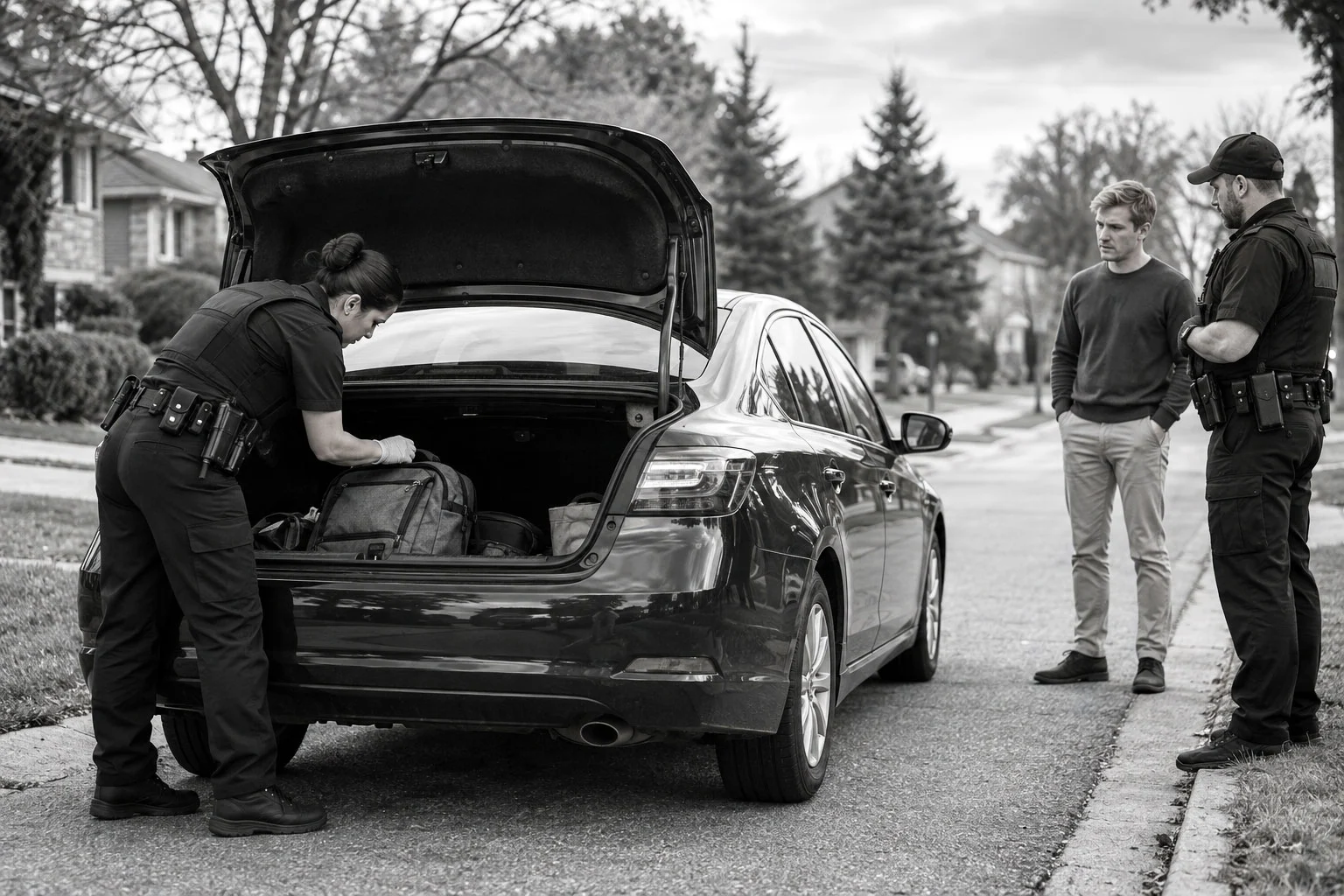
We start with the disclosure and the paperwork behind the search, not with assumptions about the case.
We explain the options in plain language: diversion where it is available, resolution where it makes sense, and a Charter motion or trial where the search or the evidence can be challenged.
You decide how to proceed, and you get clear advice about the risks of each path.
Most drug charges in Ontario are prosecuted by federal prosecutors from the Public Prosecution Service of Canada, not the provincial Crown, because the Controlled Drugs and Substances Act is a federal law. That means a different prosecutor’s office, different policies on resolution and diversion, and sometimes a different pace than a provincial case like an assault. Knowing who you are dealing with matters when you are trying to resolve a case.
After an arrest, police may release you with a court date and conditions, or hold you for a bail hearing. If you are held, you must generally be brought before a justice within 24 hours. Release conditions in drug cases can include a curfew, staying away from certain people or places, or not carrying more than one phone, so it helps to have a lawyer involved from the start.
Say as little as possible. You have the right to remain silent and the right to speak with a lawyer without delay. Explanations given at the roadside or in a cell are written down or recorded, and they rarely help later.
Before you say anything to police, get advice on the search, the evidence and your options.
Someone in custody? Call our 24/7 emergency line: 647-284-2824.
Yes. Possession is about knowledge and control, not ownership. The Crown has to prove you knew about the drugs and had some control over them. When drugs are found in a shared car or home, that is often a real issue in the case.
Not necessarily. A lawful stop for a driving reason does not by itself allow a search for drugs. Whether the search was lawful depends on what the officer knew, what they saw, and what happened next.
The second charge alleges you had the drugs to pass on to someone else. The prosecution often relies on the quantity, packaging, cash, scales or text messages to argue that. Those inferences can be challenged.
Often, yes. The law now requires police and prosecutors to consider warnings, referrals and alternative measures for simple possession. Whether that applies to you depends on the circumstances and your record.
While the case is open, an outstanding charge can appear on a criminal record and judicial matters check and on a vulnerable sector check. If the charge is withdrawn, Ontario law generally keeps it off record checks, apart from limited exceptions for vulnerable sector checks. A conviction stays until a record suspension is granted.
It can. A drug conviction, and in some cases an admission of past drug use, can make a person inadmissible to the US, even for cannabis. Talk to a lawyer before you answer border questions about a drug charge.
As soon as you can, ideally before you give any statement and before your first court date.
For people whose charges are linked to addiction, Drug Treatment Court can be an alternative to the usual path. It combines treatment, regular drug testing and close supervision by a judge. Sentencing is put off while the person takes part, and people who complete the program can receive a much lighter sentence, often probation instead of jail.
Drug Treatment Court is not available at every courthouse, and each program has its own entry rules. It is generally meant for non-violent offenders, usually involves a guilty plea, and needs the prosecutor’s agreement. We can tell you whether a program is open to you and whether it is the right choice for your case.
Charges laid in Newmarket and most of York Region are heard at the Newmarket courthouse at 50 Eagle Street West. Simcoe County charges are heard in Barrie, Bradford, Orillia, Collingwood or Midland, depending on where the charge was laid.
Every legal matter is different. Share a few details about your situation, and our team will contact you to discuss your case, your options, and the next steps.